
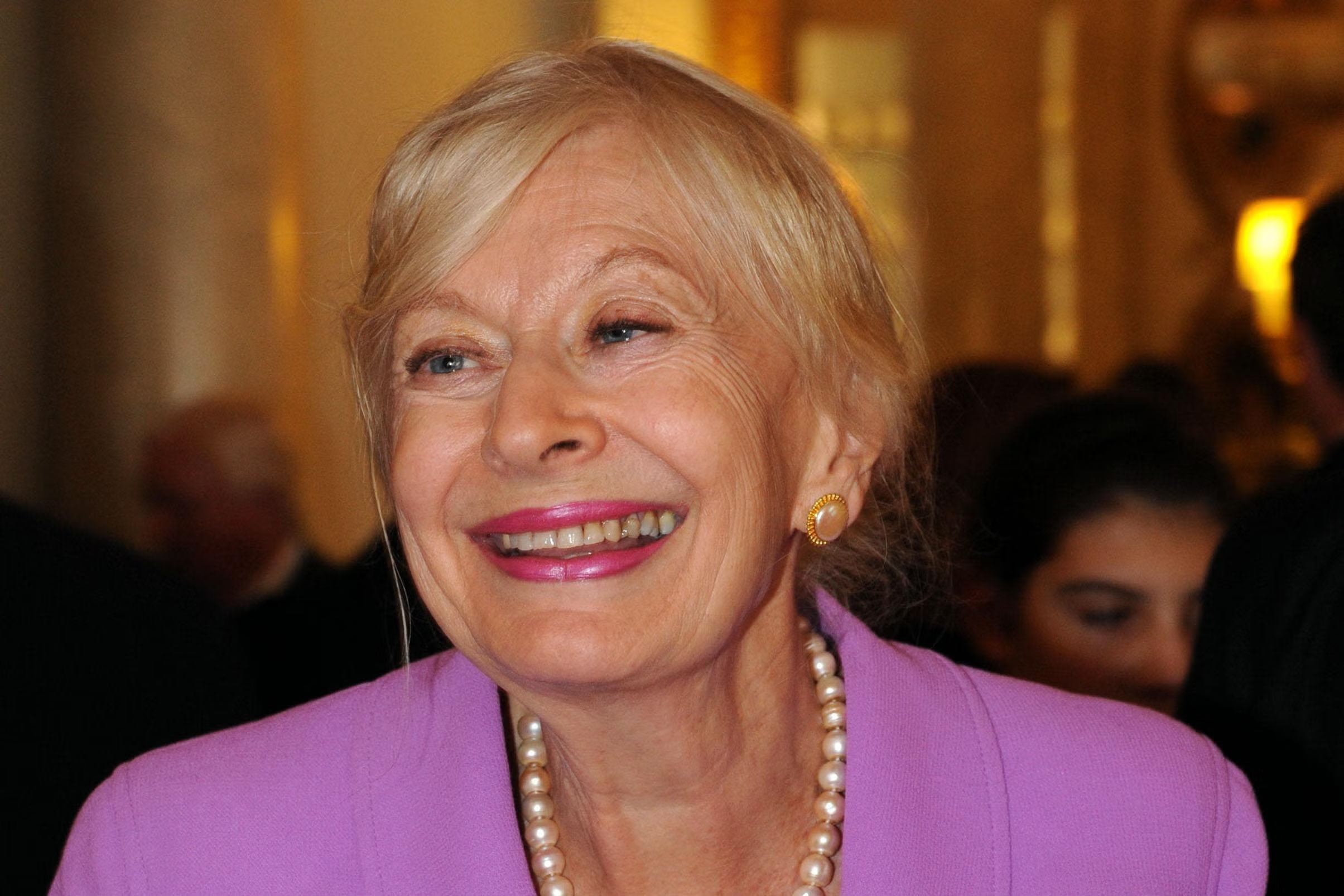
Long-serving Blue Peter editor Biddy Baxter, who turned the children’s show into a television institution, has died at the age of 92.
Over more than two decades, she introduced generations of children to the pleasures of sticky-backed plastic, on-screen pets, presenters’ adventures and charity appeals – a recipe that stood the test of time.
She was also passionate about getting her viewers involved in the programme, long before audience participation became an industry mantra.
But during her tenure, which lasted from 1965 to 1988, she also gained a reputation as a formidable figure – a tyrant who fell out with presenters and jealously guarded the Blue Peter brand.
‘Absolute powerhouse’
Peter Duncan, who was among the show’s presenters in the 1980s, told BBC Breakfast she was “a wonderful, inspiring person” and “a true force of nature”.
“She was a true enthusiast and a supporter of young people,” he said.
The presenters could get “a right old telling off” if they messed up, but “I loved working with that kind of energy and that kind of expectation”, Duncan said.
“She was truly a one-off within the BBC. If something upset her, she would trail off to see the DG (director general) and tell him what she thought. We need people like that now more than ever.”
Peter Purves, who starred on the show in the 1960s and 70s, described Baxter as “an absolute powerhouse”.
“She controlled everything about the programme, and with quite a rigid hand,” he told BBC Breakfast.
“We didn’t always get on because of that, but she knew exactly what she wanted the programme to be, and it was a success absolutely because of her. She was a remarkable woman.”
Joan Maureen Baxter was born in Leicester in May 1933. There were too many Joans in her class at school, so a nickname was made up on the spot.

Her upbringing during World War Two instilled in Biddy an ability to make do and mend, which later became part of the Blue Peter ethos.
“My friends and I held bring-and-buy sales for the Spitfire fund and put on plays and concerts for the British Red Cross and Aid to France,” she said.
She was educated at a local grammar school before going to St Mary’s College, Durham University in 1952. At that time, only 6% of undergraduates were women.
The experience shaped the rest of her life. “For three memorable years, Durham was my life.”
Baxter had intended to become a prison officer or a social worker. But, by chance, she noticed the BBC was advertising for staff.
She turned down suggestions from a university careers officer that women were best suited to teaching or secretarial work.
“He said to me, ‘No-one from Durham has ever worked for the BBC,’ so I applied. I really should be grateful to him.”
She joined the BBC in 1955 as a radio trainee studio manager, creating sound effects. She was promoted to producing Schools Junior English programmes and Listen with Mother in 1958.
She had a brief spell in children’s television to cover a period of illness and applied for a permanent job soon after. One radio colleague branded her a traitor for defecting to television.
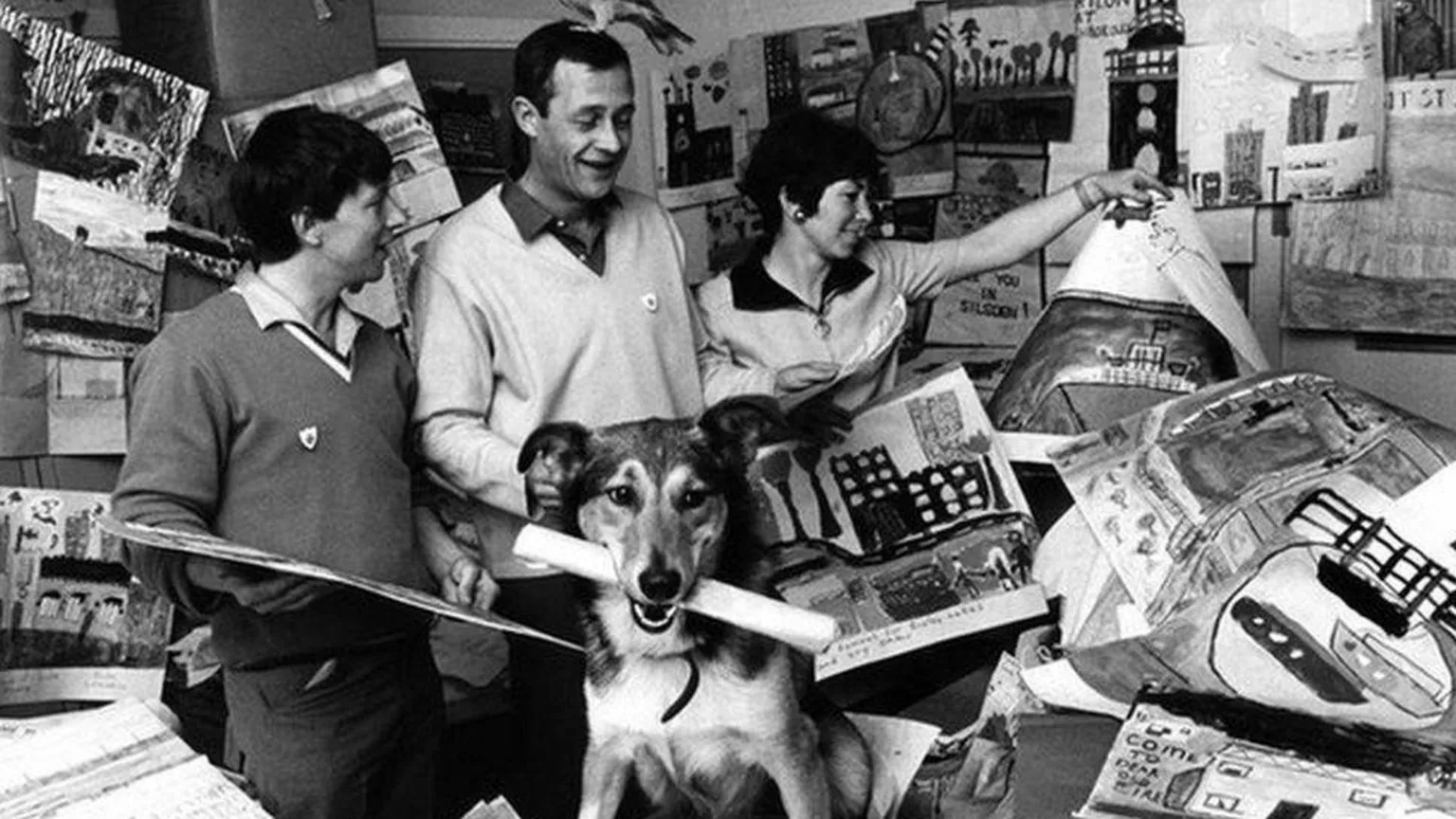
In 1962, she was asked to take over as producer of Blue Peter, a programme whose life expectancy was thought to be short.
Conceived as something for children who had outgrown Watch with Mother, its survival was resting on the fact it was cheap to make.
The programmes, which lasted 15 minutes, were presented by Christopher Trace and a former Miss Great Britain, Leila Williams.
‘Fur more important than flesh’
Williams was fired just before Baxter joined the programme, and a new presenter, Valerie Singleton, was recruited to work with Trace.
Baxter tore into the programme like a whirlwind. Within a year she had introduced the iconic Blue Peter badge after commissioning a young artist called Tony Hart to design the ship logo.
She also decided to recruit a dog, so viewers who did not have a pet could share in a sense of ownership.
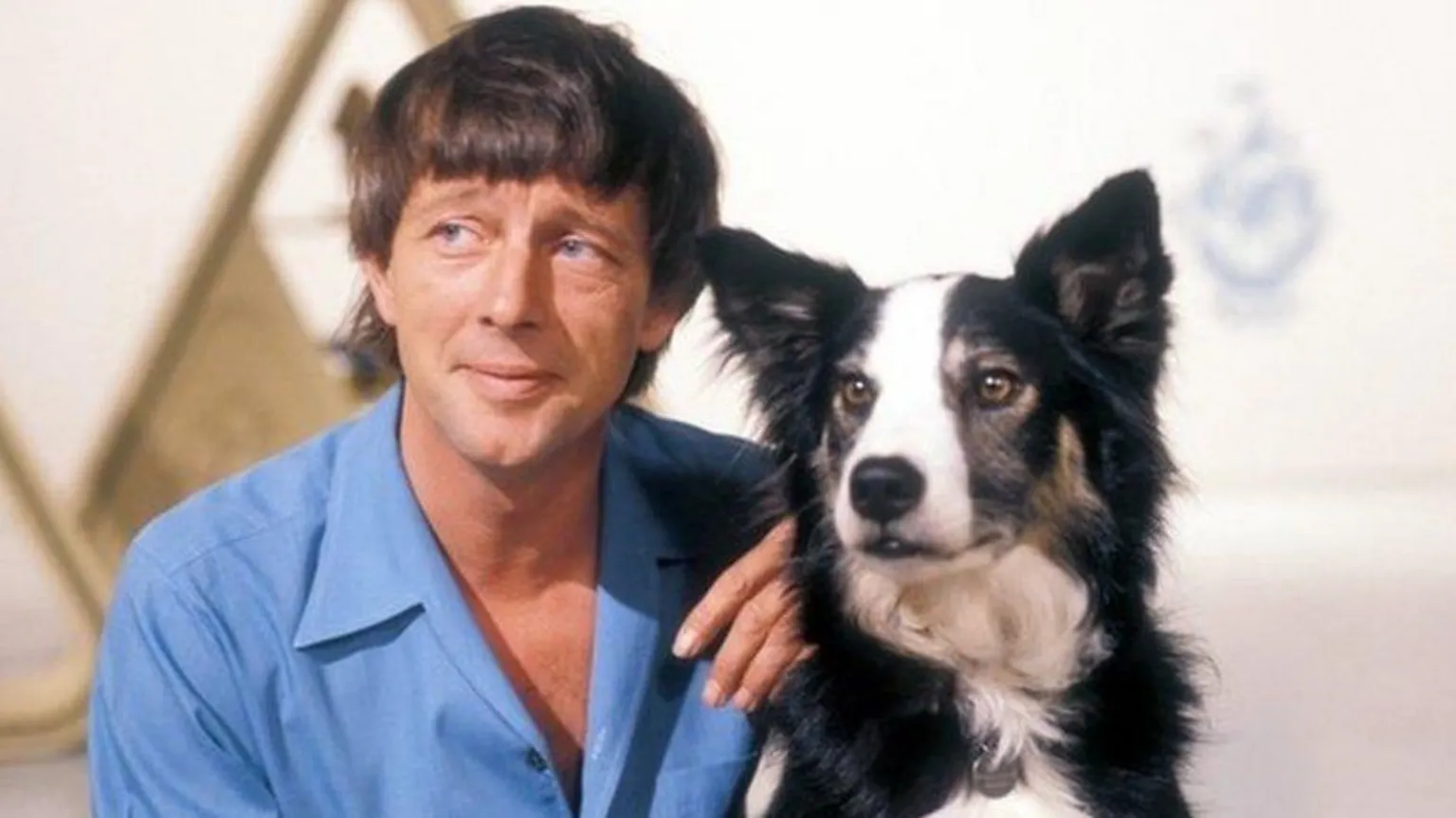
Unfortunately, the animal died just two days after its first appearance at Christmas 1962. Baxter and her producer, Edward Barnes, decided not to inform the viewers but instead substituted a sad-looking mongrel they discovered in a south London pet shop.
The audience, innocent of the switch, were asked to come up with a name for the puppy. They chose Petra.
Two years later, when children were asked to write in for a photo of the dog, more than 60,000 applied.
When Petra died in 1977, there were newspaper obituaries worthy of a film star.
“Fur and feather are more important than flesh,” Baxter used to tell presenters.
It was reported that she once threw her handbag at a director who failed to get a close up of Goldie, the programme’s golden retriever.